
Quick answer: red sediment is a clue, not a diagnosis
Rust-colored water or red particles often involve iron. USGS explains that iron can give drinking water a rusty, reddish-brown, or yellow appearance, while darker material may involve manganese as well. That observation narrows the investigation, but it does not show whether the material began in the aquifer, formed when dissolved metal met air, came from corroding equipment, or includes bacterial slime. A treatment purchase based only on color can therefore miss the actual form and source.
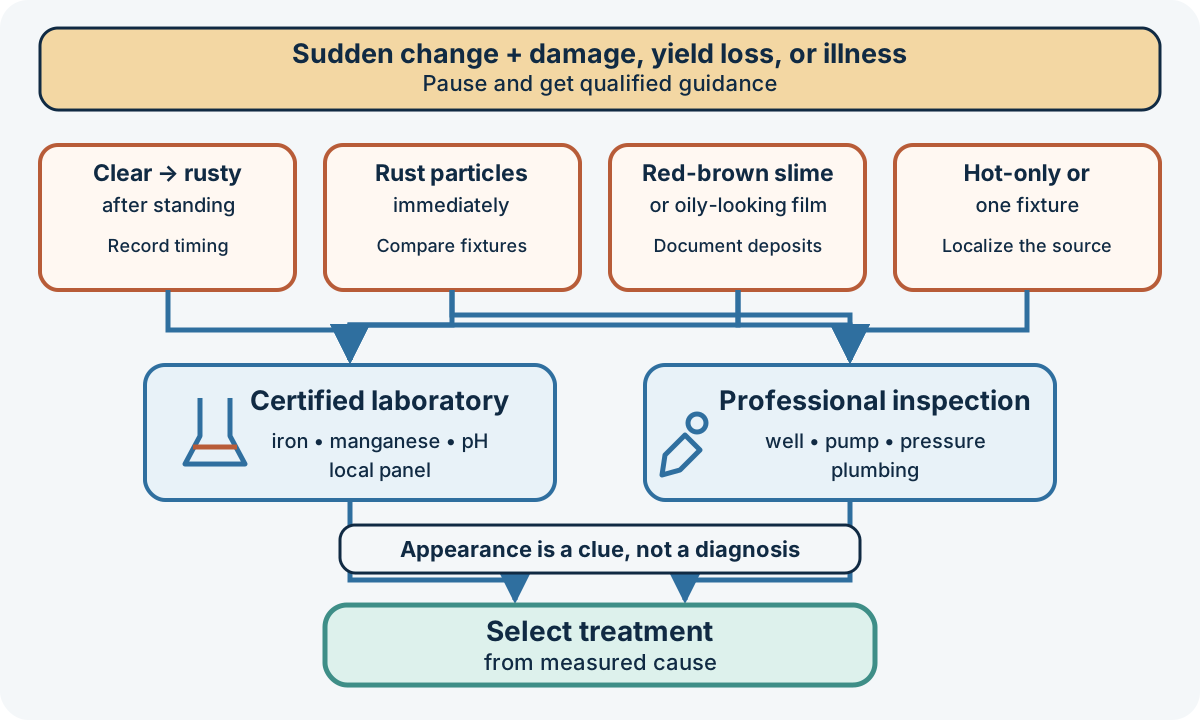
Treat a sudden unexplained change differently from a stable nuisance that has already been tested. Stop guessing and arrange qualified help when the change arrives with damage to the well, falling yield, persistent slime or odor, unusual pump behavior, or household illness. Minnesota health guidance notes that iron-bacteria growth can clog well components and create conditions in which other organisms may grow. Its safety advice includes checking nitrate and coliform bacteria rather than assuming rusty material is harmless.[3][1]
First clue: when the color and particles appear
Collecting water that looks clear and then turns orange-brown while standing points toward dissolved iron becoming an oxidized solid after exposure to oxygen. Penn State describes this clear-to-particle change as an important distinction because the dissolved and particulate forms call for different treatment evaluation. Record the time required for the change and whether the same pattern appears at several cold-water fixtures. The observation is useful evidence for a laboratory; it is not a substitute for measuring iron, manganese, pH, and other locally relevant parameters.
Water that arrives rusty or already contains settling red particles may contain oxidized metal, but Connecticut public-health guidance also lists corrosion of iron pipes or equipment as a possible source. Compare the first draw with a flushed sample and compare multiple fixtures before blaming the well. If one branch produces debris while other cold fixtures remain clear, a localized plumbing source becomes more plausible. If all fixtures change together, the source-water, pump, pressure system, or shared treatment train deserves closer attention.[4][2]
Slime, film, and iron-bacteria patterns
Sticky red-brown deposits, feathery growth, recurrent clogged screens, or an oily-looking sheen can fit an iron-bacteria pattern. Minnesota describes iron bacteria as organisms that combine iron or manganese with oxygen and produce rust-colored deposits, cells, and sticky material on wells and plumbing. Odors may be swampy, musty, oily, or sewage-like. These signs are more informative than color by itself, yet none of them confirms the organism remotely. A laboratory and an experienced well professional should evaluate the system.
Iron bacteria are generally discussed as nuisance organisms rather than a direct disease diagnosis, but that does not make a rusty, slimy system automatically safe. Minnesota advises nitrate and coliform testing and attention to well construction and maintenance. Avoid improvised acid, chlorine, or continuous chemical dosing. The same guidance notes that badly affected wells can require physical cleaning plus professionally managed treatment, and that some chemical combinations are dangerous. Document the deposits and obtain a plan suitable for the actual well.[1]
Create a sampling and isolation record across the system
Draw a simple route from a safe untreated cold-water sample point through treatment, cold fixtures, the water heater, and the affected tap. Before collecting, ask a state-approved laboratory which clean containers, flushing, preservation, and sample points it requires for iron, manganese, bacteria, and other locally relevant tests. Label every sample with location, hot or cold, before or after treatment, date, time, recent stagnation, recent pumping, and whether the water was clear initially or already contained particles.
Use the observation to isolate where the change appears. Water that is initially clear and develops color can be consistent with dissolved iron or manganese oxidizing; particles present immediately can involve oxidized material or corrosion; a hot-only pattern can involve the heater; and material first appearing after a treatment stage can shift the inspection there. Connecticut DPH describes these as diagnostic clues, not complete identification.
Record sudden onset after flooding, well work, drought, nearby disturbance, pumping changes, or pressure loss as a separate event. Contact the well professional and local health department about inspection and event-specific testing. Do not bypass treatment, open the well, disturb electrical pump equipment, or drink the water based on a settling-jar result. Red material, clear water above it, and filter appearance never establish potability.[2][5][3]
Use a clean-container observation without turning it into a home test
Ask the laboratory how and where to collect official samples; its containers and instructions control the result. Separately, a clean clear container can help you record appearance for a contractor. Note the fixture, hot or cold side, date, recent rain or well work, first-draw versus flushed sample, initial clarity, time to discoloration, settling speed, visible grit, slime, odor, and whether an oily-looking film breaks apart when disturbed. Photographs against a white background make changes easier to compare.
Do not taste the sample, add chemicals, reuse a food jar for a laboratory submission, or infer potability from settling. Fine clay can remain cloudy, coarse mineral material may settle quickly, dissolved iron may form particles later, and bacterial growth can create a different texture. The observation log is valuable because it connects timing and location to the professional investigation. It cannot identify organisms, quantify metals, establish corrosion chemistry, or show that water meets health standards.[4][1]
Order the tests and inspections that answer the cause question
Start with a certified laboratory and the local health department's private-well guidance. Iron, manganese, pH, turbidity, and the jurisdiction's normal baseline panel can help separate aesthetic metals, suspended material, and broader water-quality concerns. If slime or well-integrity concerns exist, include the microbial parameters the laboratory or health authority specifies; Minnesota explicitly recommends nitrate and coliform testing around iron-bacteria concerns. Tell the laboratory whether the sample was initially clear, immediately particulate, hot-only, or collected after a recent event.
Pair laboratory evidence with physical inspection when debris is heavy, newly appeared, connected to pump service, or accompanied by pressure or yield changes. A licensed well contractor can inspect the cap, casing, screen, pump placement, pressure equipment, and evidence of fouling. A plumber can isolate corrosion or hot-water sources inside the house. This division prevents a water-treatment seller from being asked to solve a mechanical defect and prevents a mechanical repair from being treated as proof of water quality.[1][4][2]
Choose treatment only after the form and source are measured
Particulate material, dissolved iron, corrosion, and iron-bacteria fouling are different jobs. Connecticut's troubleshooting table separates immediately visible particles from water that is initially clear and discolors later, and it gives different treatment categories for those patterns. Penn State likewise emphasizes measuring concentration and form before selecting equipment. A cartridge may capture particles, but it does not prove the well is sound, stop corrosion, treat a dissolved form by itself, or disinfect bacterial growth.
Use the report and inspection findings to compare documented options at the home's peak flow and water chemistry. The eventual design may involve repairing the well or plumbing, professionally cleaning fouled components, oxidation followed by filtration, a correctly sized particle-control stage, or another measured treatment path. Verify the exact model's performance information and maintenance needs, then retest as directed. The objective is correction plus evidence, not clearer-looking water produced by an unexplained filter.[2][4][1]
Keep a record and know when to escalate
Keep the laboratory report, sample photographs, well log, repair dates, pump and pressure-tank records, treatment settings, cartridge changes, and notes about rain or construction. Repeat the same fixture comparisons after any corrective work. A stable record can reveal whether material is tied to stagnation, hot water, high demand, pump starts, seasonal conditions, or a particular component. It also prevents the next contractor from repeating a treatment that changed appearance without addressing the source.
Escalate promptly when sediment increases sharply, the well loses yield, slime repeatedly blocks plumbing, the pump or pressure system behaves differently, or a laboratory reports a health-related contaminant. Use the site's laboratory-report helper to organize units and questions, then take the actual report to the appropriate health, well, plumbing, or water-treatment professional. Move to the sediment-filter and iron-filter buying guides only after the measured cause makes those product categories relevant.[1][2]
| Sample or observation | Record | Question it can narrow | Limit |
|---|---|---|---|
| Untreated cold | Initial appearance, settling, time, method | Well/source versus downstream system | Requires a safe point and lab instructions |
| Cold fixtures | Affected locations and first-draw/flow pattern | Local plumbing versus broad distribution | Does not identify the material |
| Hot water | Same-location cold comparison | Water-heater branch | Do not service a heater from color alone |
| Before/after treatment | Stage identity, pressure, maintenance event | Stage loading or downstream source | Bypassing may be unsafe |
| Flood, work, pressure loss, or illness | Date, event, safe-water action | Event-specific inspection and testing | Appearance never proves potability |
Scroll sideways to read every column on smaller screens.
Before you buy or hire
Related reading and tools
Choose the next step for your situation: measure, compare options, or maintain and verify.
- Explore the topicWell Water Treatment
- Measure with a toolWell Water Lab Report Decision Helper
- Measure the problemHow Often Should You Test Well Water? A Practical Schedule
- Compare your optionsSediment Filter Micron Size for Private Wells: A Selection Record
- Compare your optionsChoosing an Iron Filter for Well Water: Lab Report to Installable Quote
- Compare your optionsSpin-Down vs Cartridge Sediment Filter for Private Wells
How this guide was checked
Guides are built from official sources, product documentation, manufacturer manuals, and practical homeowner decision criteria. We do not claim hands-on product testing unless a page explicitly says a product was tested.
- Source-backed editorial review
- 5 cited source records
- Private well owners should test before buying treatment. Odor, stains, and taste are not complete safety assessments.
Ready Home Systems is educational and not a substitute for local code officials, licensed trades, medical providers, water labs, or mitigation professionals.
Read review methodologySources and manuals
- Iron Bacteria in Well WaterMinnesota Department of Health
- Iron and Manganese in Private Well WaterConnecticut Department of Public Health
- What Can Be Causing Our Drinking Water to Have a Reddish Color?U.S. Geological Survey
- Iron and Manganese in Private Water SystemsPenn State Extension
- Protect Your Home's WaterU.S. Environmental Protection Agency
FAQ
Does red sediment always mean iron from the well?
No. Dissolved or particulate iron or manganese, corroding equipment, bacteria-related slime, and disturbed mineral material can create overlapping clues. Isolate sample locations and use laboratory and professional evidence.
Can a settling jar identify the contaminant?
No. It can preserve timing and settling observations for the handoff, but it is not a certified analysis and cannot establish drinking-water safety.
Should I add a finer cartridge first?
Only after the source, particle job, flow, and pressure-loss plan are understood. A sudden sediment change may require well or plumbing inspection before filter selection.
What if the color follows a flood, repair, or illness?
Use known-safe water as directed and contact the local health department and well professional promptly. Do not wait for the appearance to clear.